A Complete Guide to Activating Zepbound Coupons and Pharmacy Savings
The cost of modern obesity treatment can become a serious financial problem when an insurance plan refuses coverage or leaves a large portion of the prescription at the patient’s expense. zepbound coupons are one part of the savings picture, but they are not a universal discount that works for every patient. Lilly currently separates its savings options by insurance status, product format, and eligibility, so checking the right program matters before a prescription reaches the pharmacy counter.
There is also an important 2026 update. Older articles still quote expired Zepbound savings terms from 2024 or 2025. The current Lilly program lists different options for the single-dose pen and the single-patient-use KwikPen, including self-pay pricing that starts at $299 for 2.5 mg and $399 for 5 mg. Higher KwikPen doses can qualify for a $449 purchase offer under specific refill conditions.
That means the practical strategy is not simply finding a coupon code. It is figuring out which savings route matches the prescription, insurance situation, and pharmacy being used.
Zepbound Coupons Depend On The Prescription And Insurance Route
The biggest mistake is assuming that every Zepbound patient receives the same discount.
Lilly currently presents separate savings paths for commercially insured patients, self-pay patients, and people using different Zepbound delivery formats. Its coverage tool also warns that an online coverage evaluation is not a guarantee of coverage or available savings and recommends confirming the result directly with the insurance provider.
Single-Dose Pen With Commercial Insurance
For the single-dose pen, Lilly’s current terms say commercially insured patients whose plan covers Zepbound can pay as little as $25 for a one-month prescription, subject to savings limits and eligibility. The current terms expire on December 31, 2026.
This is different from the self-pay route.
Single-Dose Pen Without Coverage
Lilly also lists a savings path for commercially insured patients whose plan does not cover the single-dose pen. The current terms allow eligible patients to pay as little as $499 for a one-month supply, with the savings amount tied to the product’s wholesale acquisition cost and program limits.
KwikPen Self-Pay Pricing
The current KwikPen self-pay structure is more dose-specific.
| Zepbound KwikPen dose | Current starting self-pay price | Key condition |
| 2.5 mg | $299 | Starting dose |
| 5 mg | $399 | Terms apply |
| 7.5 mg | $449 | Purchase offer terms |
| 10 mg | $449 | Purchase offer terms |
| 12.5 mg | $449 | Purchase offer terms |
| 15 mg | $449 | Purchase offer terms |
Lilly states that 2.5 mg is intended for treatment initiation and is not an approved maintenance dose. The $449 purchase offer for the higher KwikPen doses requires the refill to be completed within 45 days of the previous prescription’s delivery or receipt.
Government Insurance Requires A Different Path
The commercial savings card should not be treated as a universal coupon for Medicare, Medicaid, or other government-funded healthcare programs.
Lilly’s current savings information specifically separates government beneficiaries from the commercial savings-card pathway. At the same time, the company now has other access programs, including a Medicare GLP-1 Bridge pathway for eligible patients using the KwikPen.
That distinction is critical because using the wrong savings program can create a billing problem rather than a discount.
Manufacturer Savings Card Activation Starts Before The Pharmacy Claim
A manufacturer savings card is useful only when the patient meets its eligibility requirements and the card is activated correctly.
Lilly’s current enrollment system asks patients with a prescription to enroll in Savings and Support or look up an existing savings card. The company also provides a dedicated savings page where eligible patients can access the appropriate program.
Confirm The Product Format First
The prescription may be for a single-dose pen, single-patient-use KwikPen, or another Zepbound presentation. The savings rules are not interchangeable.
This is one reason old coupon articles can become misleading. A savings amount associated with one product format cannot simply be transferred to another.
Check Commercial Insurance Eligibility
The current commercial savings card requires qualifying commercial drug insurance for the applicable program. Government-funded coverage is excluded from that specific pathway.
Patients should therefore confirm the insurance category before trying to activate a card.
Use The Current Lilly Terms
The safest place to verify eligibility is Lilly’s current savings page rather than an old coupon database.
The official terms can be amended, and Lilly explicitly states that program eligibility and conditions can change.
Keep The Prescription And Card Information Together
When a pharmacy claim fails, having the prescription details, active card information, and insurance information available makes the conversation much easier.
It also prevents the patient from guessing which savings program was supposed to process the claim.
Weight Loss Medication Savings Need A Different Approach When Insurance Refuses Coverage
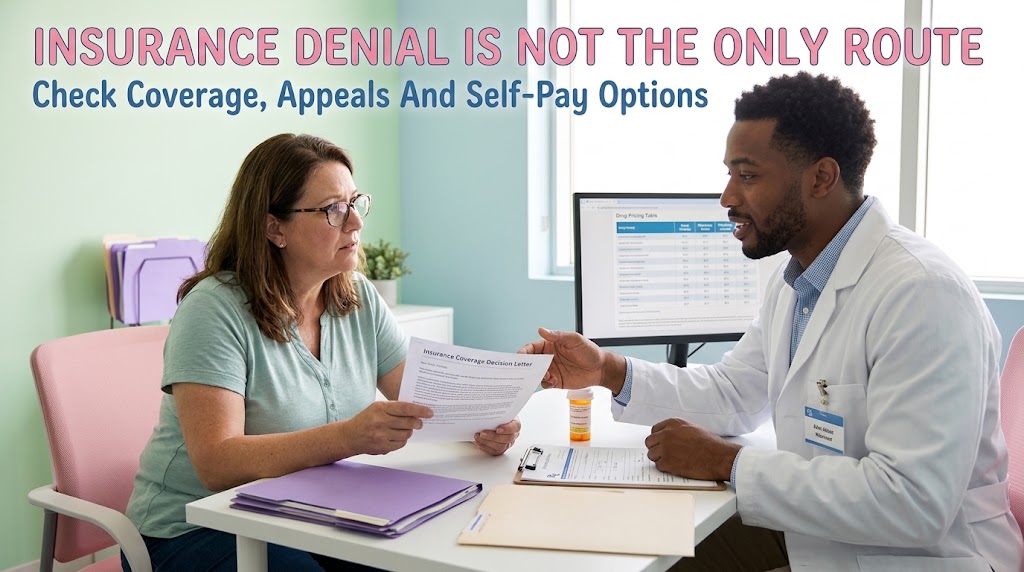
Insurance denial can be one of the most confusing parts of paying for a weight loss medication because a rejected claim does not necessarily mean every affordability option has disappeared.
Lilly’s access-and-coverage resources specifically distinguish between commercial coverage and self-pay options. The company also provides a prior-authorization guide and resources for appealing coverage decisions.
The important thing is to identify why the claim was rejected.
A pharmacy rejection may mean the drug is excluded from the benefit, prior authorization is required, the prescription does not match the plan’s requirements, or the selected savings pathway is incompatible with the insurance.
Read The Rejection Message
Do not rely only on a cashier saying the coupon did not work.
Ask for the exact rejection information available to the pharmacy. The pharmacy may be able to tell whether the problem came from the insurance claim, the savings card, the product configuration, or another processing requirement.
Ask The Prescriber About Prior Authorization
If the insurer requires prior authorization, the next step may involve the prescribing clinician rather than the pharmacy.
Lilly provides a prior-authorization guide and a letter of medical necessity resource for healthcare professionals navigating coverage.
Separate Coverage Appeals From Self-Pay Choices
An insurance appeal and a self-pay purchase are two different financial decisions.
A patient should not assume that choosing a self-pay route automatically cancels the possibility of pursuing insurance coverage later. The exact implications depend on the insurance plan and program terms, so the insurer and prescribing clinician are the appropriate sources for that decision.
Pharmacy Discount Problems Usually Start With A Mismatch
A pharmacy discount can fail even when the patient appears to have a valid card.
The problem may be the wrong product, wrong insurance pathway, expired eligibility, incorrect card information, or a program requirement that has not been satisfied.
Lilly’s current KwikPen terms even recognize that savings may sometimes fail to apply at the point of sale. For eligible patients who meet the relevant conditions, the program provides a post-transaction reimbursement process when Lilly could not verify the qualifying refill at checkout.
Give The Pharmacist A Clear Script
A calm, specific request is more useful than simply saying the coupon is broken.
A patient can say:
“I have an active Zepbound savings program and I would like you to check whether the claim is being processed under the correct product and insurance information. Could you tell me the rejection message if the savings card is being rejected”
The pharmacist may then be able to identify what needs correction.
Ask Whether The Prescription Is Being Processed As The Correct Product
A single-dose pen and KwikPen can have different savings terms.
Lilly explicitly distinguishes these products in its current savings materials.
Do Not Ask The Pharmacy To Override Eligibility Rules
A pharmacist cannot legitimately make an ineligible patient eligible for a manufacturer program.
The goal is to identify a processing error when one exists, not to bypass the terms of the savings program.
Keep The Receipt If The Program Allows Reimbursement
For the current KwikPen self-pay program, Lilly provides a post-transaction reimbursement pathway for certain eligible situations when the qualifying savings could not be verified at the point of sale. The terms specify that supporting documentation, including the original pharmacy receipt, may be required.
Insurance Denial Does Not Automatically Mean The Same Price At Every Pharmacy
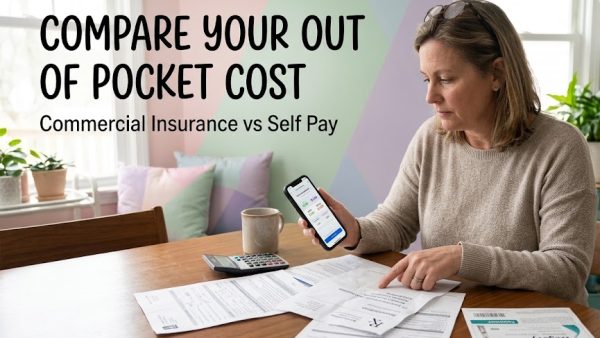
An insurance denial can push a prescription into a completely different payment route, which is why comparing the available Lilly pathways matters.
The current self-pay program is particularly important for KwikPen prescriptions. Lilly lists starting prices of $299 for 2.5 mg, $399 for 5 mg, and $449 for several higher doses under the applicable purchase offer.
However, the advertised starting price should not be interpreted as a guarantee for every patient. Eligibility, prescription status, dose, refill timing, taxes, and program terms can affect the final amount.
A practical comparison looks like this:
| Situation | Potential route | What to verify |
| Commercial insurance covers single-dose pen | Savings card | Insurance coverage and eligibility |
| Commercial insurance does not cover single-dose pen | Savings option | Current $499 terms and eligibility |
| Self-pay KwikPen | Self-pay savings card | Dose and program conditions |
| Government coverage | Government-specific access options | Program eligibility |
| Prior authorization required | Insurance route | Prescriber documentation |
| Point-of-sale savings failure | Reimbursement pathway when eligible | Receipt and program requirements |
For people accustomed to hunting discounts across different purchases, the same basic discipline applies. A broader resource such as this Harbor Freight coupons and free tools guide can illustrate the general idea of checking offer conditions, but prescription savings should always be verified against Lilly’s current medical and financial eligibility rules.
The $449 Zepbound Offer Has A Refill Rule Worth Watching
The current $449 offer is particularly easy to misunderstand because it is not simply a permanent flat price for every higher dose.
Lilly states that the $449 purchase offer applies to 7.5 mg, 10 mg, 12.5 mg, and 15 mg single-patient-use KwikPen prescriptions under the applicable program. To continue receiving that offer, the refill must be completed within 45 days of the previous prescription’s delivery or receipt.
That creates a practical calendar issue.
If a patient waits too long between qualifying purchases, the regular price can apply. Lilly lists regular prices of $499 for 7.5 mg and $699 for 10 mg, 12.5 mg, and 15 mg before the applicable purchase offer.
The discount therefore depends not only on having the card but also on following the refill conditions.
Zepbound Coupons Work Best When The Billing Route Is Planned First
The biggest lesson from the current 2026 program is that there is no single coupon that solves every Zepbound cost problem.
The correct path depends on the prescription format, insurance status, dose, and whether the patient is using commercial coverage or self-pay.
The most efficient process is:
- Confirm the prescribed Zepbound product format.
- Check the current Lilly savings page.
- Identify the correct insurance or self-pay pathway.
- Confirm eligibility before going to the pharmacy.
- Keep the savings card information available.
- Ask the pharmacist for the exact rejection reason if the claim fails.
- Keep the original receipt when the program provides a reimbursement pathway.
- Recheck the current terms before every major pricing decision.
This approach also prevents a common mistake with prescription savings programs: treating an old screenshot or social-media post as if it were current policy.
Lilly’s own website currently provides separate tools for coverage verification, savings enrollment, self-pay pricing, and prior-authorization support. Those resources are more reliable than a generic coupon page because they reflect the program structure currently being offered.
Q&A
Can A Zepbound Savings Card Be Used With Medicare Or Medicaid?
The commercial Zepbound Savings Card has government-program exclusions. Patients with Medicare, Medicaid, or another government-funded program should check the specific access pathway available to them rather than attempting to use the commercial card. Lilly currently lists a separate Medicare GLP-1 Bridge program for eligible patients using the KwikPen.
What Happens If The Pharmacy Cannot Apply The KwikPen Savings At Checkout?
Eligible patients who satisfy the applicable program conditions may have access to a post-transaction reimbursement process. Lilly states that documentation such as the original receipt and savings-card information may be required, and the current terms specify a March 31, 2027 deadline for qualifying reimbursement claims.
Can The $449 KwikPen Price Be Expected Every Month?
Not automatically. The $449 offer currently applies to specified higher doses under purchase-offer conditions, including a 45-day refill requirement. Lilly also states that regular prices can apply when the refill condition is not met and that program terms can change.

Leave a Reply